BoschRepair Miami

72 conditions, 157 labels, all of them the manufacturer's own

Bosch error codes: what is on your display.

Type what you can see and the list filters to it. Every code here is published by the manufacturer, and unlike most makes, this one says what each of them means — so these pages can go straight to what the code covers and what it still does not tell you.

  • 72 conditions, each with its own page
  • 157 code labels and signals covered
  • 49 you can act on yourself
  • from $95 diagnostic, credited to the repair

Book a visit

Book a diagnostic visit

Your model number and a line about what it is doing is enough to get started. We will confirm the earliest slot we can genuinely keep.

  • Diagnostic from $95, credited toward the repair when you go ahead
  • The work and the price in writing before anything is opened
  • A warranty on our workmanship
  • Miami-Dade, Broward and Palm Beach counties
  1. 01 You tell us the model and what the unit is doing. A photo of the display helps.
  2. 02 We come back with the earliest slot we can genuinely keep, not the earliest one that sounds good.
  3. 03 Diagnosis on site, then the scope and the price in writing before anything is opened.

Your details stay private. No spam, ever.

Loading the booking form…

The booking form is taking longer than it should. Call (305) 783-3552 and we will book the visit with you.

Find your code

Search the full list

Bosch writes the same condition four ways across its generations — E24, E-24, E6103 and four blinks of a wash light are one condition. Type whatever you can see: spaces and dashes are ignored, and a dishwasher that has no display at all is counted here by its flashes.

72 conditions covering 157 published labels, read off the manufacturer's own support pages. If your code is not here, it is not necessarily invalid — some are shown only in service mode, and some are specific to a model year. Call (305) 783-3552 with the model number and what the display is doing.

Three ways to say one thing

On a machine with no display, the flashing lights are the code.

The same condition is published under different labels depending on how old the appliance is. A dishwasher that cannot get water out shows E24 or E25 on an older machine, E6102 or E61-03 on a newer one, and on a model with no digital display at all it flashes four lights above the door. The manufacturer publishes that mapping itself; they are not three problems.

So there is one page here per condition rather than one per label, and every page names the others. Type any of them into the search above and you will land in the same place.

Start from the symptom instead
Dark wood drawers with long steel handles beside a bright window

Before you call

Four things worth having in front of you

A Bosch clears its code the moment the door is opened or the power cycled, and nobody can get it back afterwards. Two minutes now is usually the difference between one visit and two.

Write it down

  • Photograph the display, every character of it — a code with a colon and a second number means both halves matter
  • Take the model number from the plate: the door edge on a dishwasher, the door collar on laundry

Then try the free thing

  • Five minutes genuinely off at the breaker, not standby — it clears a real share of them
  • And note whether the code came back, because a code that survives that is a code that means something

No code, just lights?

A pattern of flashing lights is a code, and we can read it.

Plenty of this equipment has no display to show a code on — the entry-series dishwashers in particular, which say everything with the lights above the door. Which lights, and whether they flash together or in turn, is as specific as any number.

Tell us the model number and which lights are doing what, and we will tell you whether it is something to check yourself or something to book. Call (305) 783-3552, or describe it in the form above.

By what it is doing

Start from the symptom instead

Seventy-two numbers still do not cover a washer that trips the breaker or a dryer that runs cold. Twenty-six symptom pages start from what the machine is doing, cheapest cause first.

  • Standing water and two cups in a dark stainless sink
    The most common call

    Dishwasher not draining

    Water standing in the bottom of the tub after a cycle. Two of the five causes come out by hand without tools, which makes this the symptom most worth five minutes before booking anything.

    What it usually means
  • Plates and bowls draining in a rack by a bright window
    Usually not a repair

    Dishwasher not drying

    Plastics coming out wet is how these machines are designed to behave, and it is the single most common reason somebody books a repair on this brand that they do not need. Glassware coming out wet is a different matter.

    What it usually means
  • Seven plates of different patterns laid out on a slate surface
    The machine may lock itself out

    Dishwasher leaking

    Water on the floor, or a machine that has stopped and refuses to start. The leak protection on these dishwashers catches water in the base before it reaches your kitchen — which is why the first sign is usually a machine that will not run rather than a puddle.

    What it usually means
  • A bowl still marked with food residue, sitting in a sink
    Film, grit or dishes still dirty

    Dishwasher not cleaning properly

    Dishes coming out gritty, cloudy or with food still on them. In a hard-water city a good share of this is scale and detergent rather than a failed part — and the machine will eventually tell you so with a code of its own.

    What it usually means
  • Pans and lids stacked upside down on a tiled counter
    Often the door, not the machine

    Dishwasher will not start

    A machine that does nothing, starts and stops, or lights up and never fills. Door and power account for most of these, and both are worth checking before anything is booked.

    What it usually means
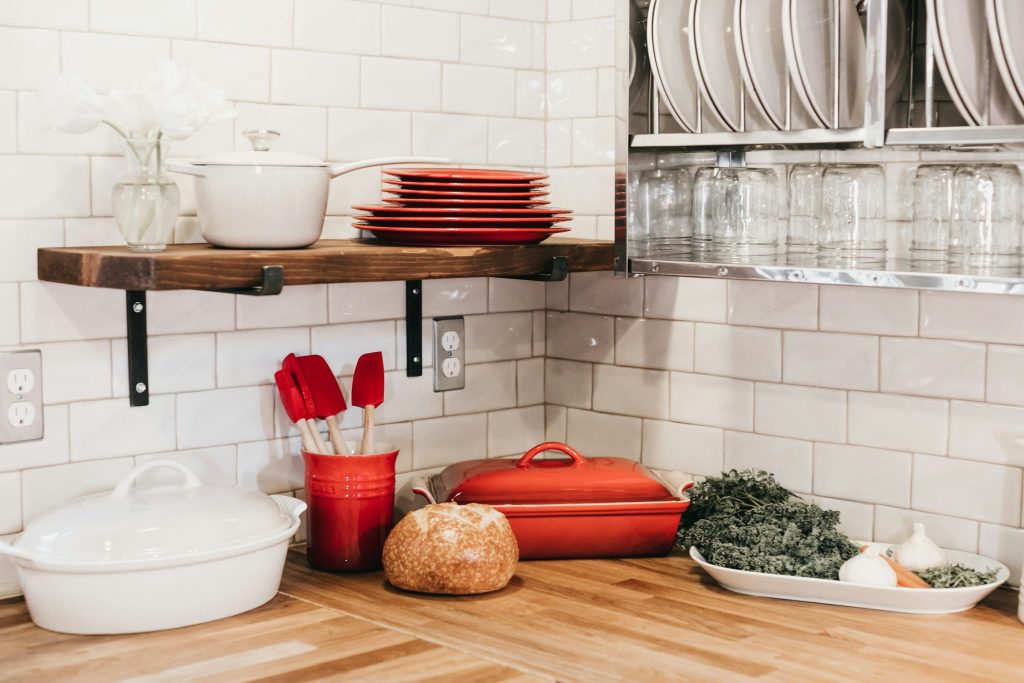
  • A tidy kitchen corner with a shelf of clean cookware over a wooden counter
    Almost always maintenance

    Dishwasher smells

    A smell when the door opens, or one that arrives on the dishes. Rarely a repair, usually a filter, and occasionally a drain hose installed in a way that lets the sink back into the machine.

    What it usually means
  • Condensation running down chilled glass bottles
    Diagnosed by behavior

    Refrigerator not cooling

    A refrigerator running warm, cooling unevenly, or holding overnight and drifting by day. This equipment publishes almost no codes, so what it is doing matters more here than on anything else on this site.

    What it usually means
  • A tumbler of ice on a wooden table in low sun
    Slow before it stops

    Ice maker not making ice

    No ice, or a bin that never fills. Production halves over weeks before it stops altogether, and almost every cause is cheaper to fix while the machine is still limping along.

    What it usually means
  • A glass being filled with ice under a refrigerator dispenser
    Splits the problem usefully

    Water dispenser not working

    No water at the dispenser, a trickle where there was a stream, or a dispenser that runs on when you let go. Whether the ice maker still works is the fastest way to narrow this.

    What it usually means
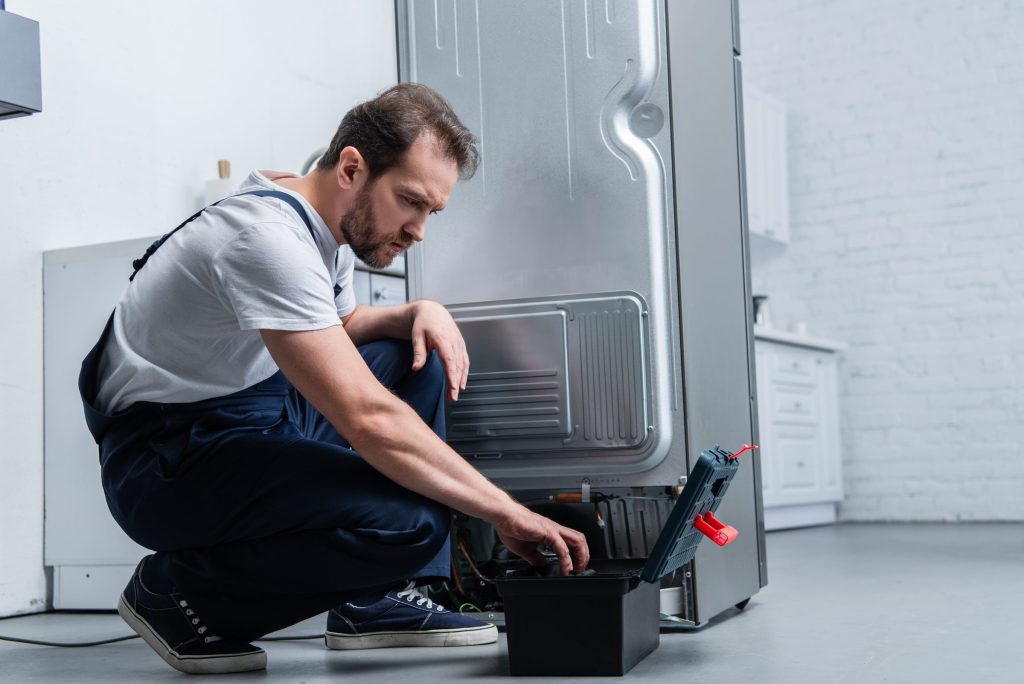
  • A technician crouching behind a stainless refrigerator pulled out from the wall, reaching into the open toolbox at its foot
    Some of it is normal

    Refrigerator making noise

    Buzzing, clicking, gurgling or a rattle that comes and goes. Several of these noises are the appliance working — and one of them is a fan that is about to cost you a warm refrigerator.

    What it usually means
  • Detergent foam and bubbles across pale blue water
    There is a filter you can open

    Washer not draining

    A cycle that stops with water in the drum, or clothes left soaking because the machine never got to the spin. There is a pump filter behind a flap at the front of these machines, and almost nobody knows it is there.

    What it usually means
  • Folded white towels stacked on a dark chair
    Often the load, not the machine

    Washer not spinning

    Clothes soaking at the end of a cycle, or a spin that starts, slows and gives up. On a compact drum an uneven load stops the spin far more often than a failed part does.

    What it usually means

About codes

What people ask us about error codes

Is there a Bosch error code list I can download?

The manufacturer publishes its codes across its own support pages, one page per appliance. The list here is compiled from those so you can search all of them at once, with the older and newer labels for each condition side by side. We do not reproduce the manufacturer's own wording or repair procedures.

My code has a colon and two groups of numbers.

That is the newer laundry format, and the second group is the half that matters — it is what separates a blocked drain from a supply problem from too much detergent. Photograph the whole thing rather than the first part.

How do I clear a code?

Five minutes genuinely off at the breaker clears a good number of them. Clearing a code does not fix what caused it — if it returns, it is telling you something. Photograph the display before you cut the power; the code will be gone afterwards.

Does the case of the letter matter?

On the ranges, yes, and it is the one place it does. A lower-case e302 is the power board and an upper-case E302 is the control panel — two separate published conditions with two different answers. Everywhere else, case is just how the display draws it.

The code says what is wrong. Why would I need a technician?

Sometimes you do not, and about two thirds of the conditions here are things an owner can act on. What a published cause names is a circuit rather than a component: a drain code covers a filter, a pump, a loose cover, a kinked hose and an air gap, and four of those five you can handle yourself.

In more detail

How to read a Bosch error code, and what it does not tell you

This make publishes more than most

Seventy-two conditions on this site come from the manufacturer’s own support material, with the label it uses and the meaning it gives. That is unusual. Several makes we work on publish nothing at all for refrigeration, and the difference shows in how a call starts: with a Bosch, the number on the display is a real beginning rather than a rumor from a forum.

The same condition has more than one label

An older dishwasher shows a two-digit code, a newer one a four-digit code, and a machine with no display at all shows a pattern of lights. All three can describe the same thing – water not leaving the machine – and none of them names the part. E15 is the clearest example: it is the leak-protection system reporting water in the base pan, and the water is in the base pan for one of five ordinary reasons, only one of which is a broken component.

A code names a circuit, not a part

This is the half that gets lost. A code says which reading the control did not like. It does not say whether the sensor is wrong, the thing it is measuring is wrong, or the wiring between them is wrong, and those are three different repairs at three different prices. That is what the on-site diagnostic settles, and it is why we do not quote from a code alone.

What to do while the code is still on screen

Photograph the display, note the model number from the tag, and note what the machine was doing when the code appeared – part-way through a cycle, at the start, or after a power cut. Those three facts turn a code into a diagnosis. If the machine has no display, count the flashes: the pattern is the code, and we can read it.

When there is no code at all

Plenty goes wrong quietly. A refrigerator that cools unevenly, a dryer that takes two cycles, a hood that runs at one speed – none of that reports a number, and it is what the symptom pages are for. A machine behaving oddly with a clear display is not a machine with nothing wrong.
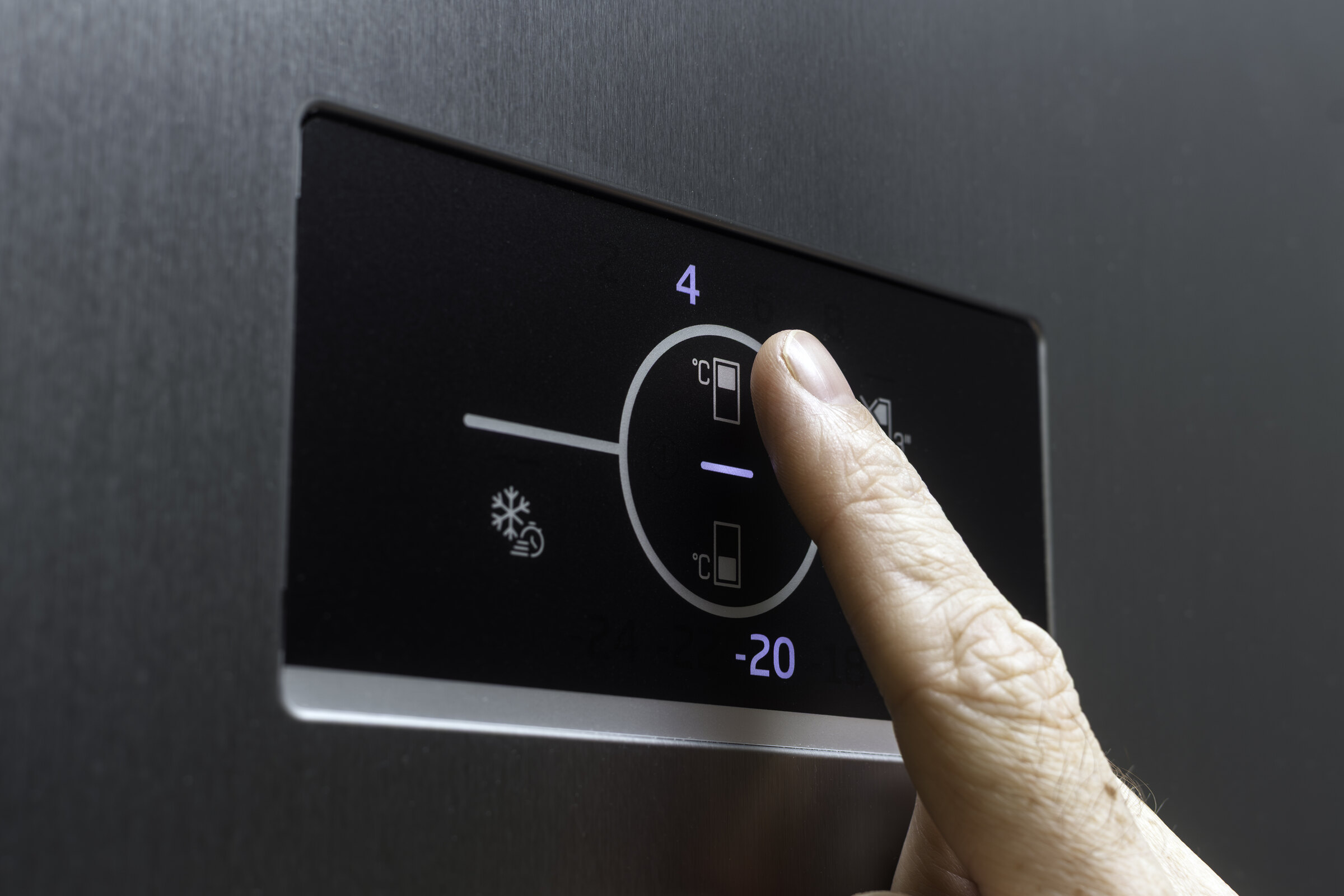

Photograph the display, then tell us the model.

Those two things are usually enough for us to say what is likely, what it involves, and what it should cost before anyone comes out.

This article is based on:

  • Official manufacturer documentation
  • Internal repair procedures
  • Technician repair history
  • Company quality standards
Call (305) 783-3552